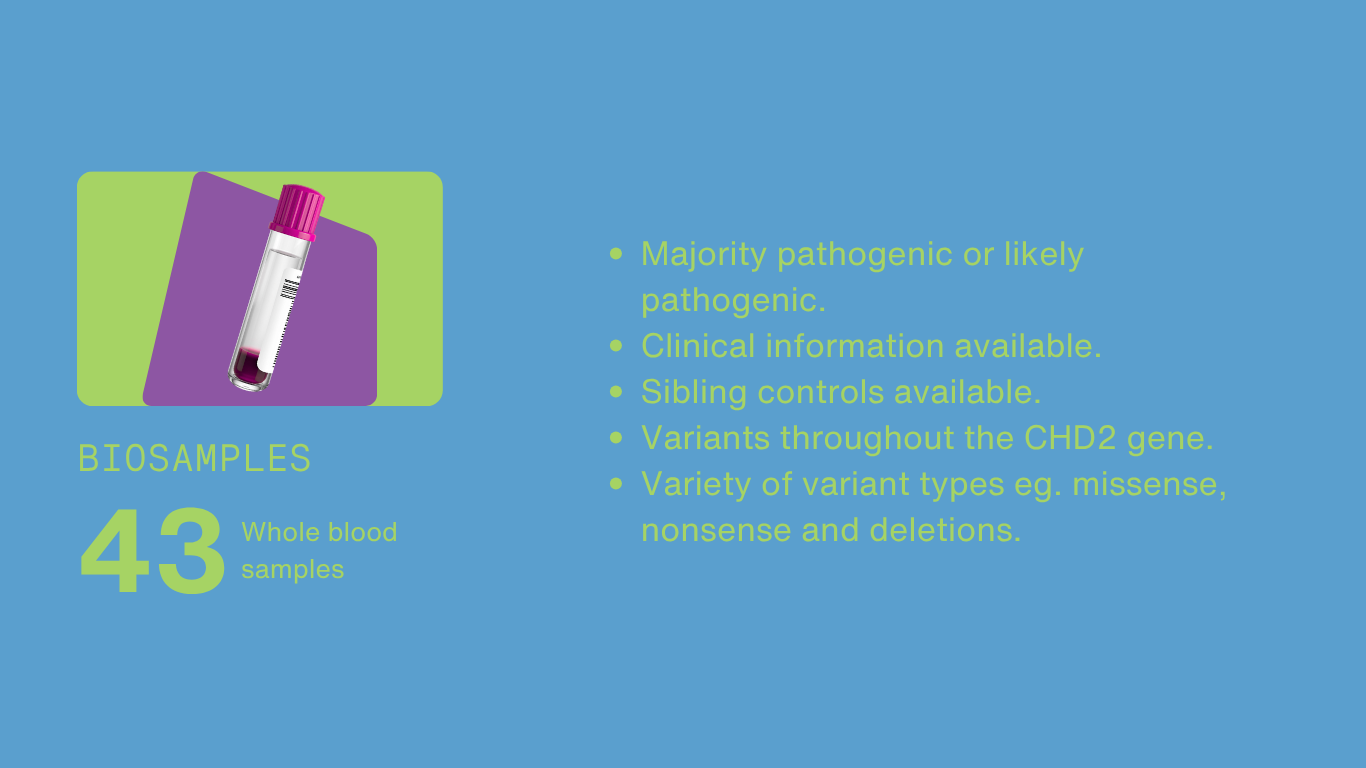
CCC now has cell lines available through our own biobank!
For more information, please reach out to research@curechd2.org
Any treatment intended to be used in people must be safe, efficacious and have the greatest potential to benefit people living with CHD2.
For these reasons, developing models of CHD2 that can be widely shared with the fewest barriers or commercially purchased is a top priority for our community.
Listed below is a growing list of models that can be used as tools for basic biology and translational-preclinical studies of CHD2 that are available from CCC and elsewhere.
.png)
.png)
IPSC Models
PFIZi029-A Description: c4636 C>T in exon 36 of the CHD2 gene (NM_001271.3)
CHD2 human stable knockdown cell lines through AcceGen Biotech
Human CHD2 shRNA knockdown in HEK293 or HeLa cells
.png)
Mouse Models
CHD2 mouse model that has 2 nucleotide deletion in the 3rd exon of CHD2, which leads to production of little to no CHD2 protein.
Dr. Igor Ulitsky has a mouse model that has 2 nucleotide deletions in the 3rd exon of CHD2, which leads to production of little to no CHD2 protein. See his paper for more details: https://www.nature.com/articles/s41467-019-13075-8.pdf
CHD2 mouse alleles available through The International Mouse Phenotyping Consortium and related phenotypic data
CHD2 tm1 targeting vectors and ES cells Allele type: reporter-tagged deletion allele (with selection cassette)
CHD2 tm1a mice, targeting vectors, and ES cells Allele type: KO first allele (reporter-tagged insertion with conditional potential)
CHD2 tm1b mice and tissue available through The Centre for Phenogenomics Allele type: Reporter-tagged deletion allele (post-Cre)
CHD2 mouse alleles available through Taconic Biosciences, Inc.
CHD2 constitutive knockout Allele type: Gene trap
Zebrafish Models
CHD2 zebrafish line available through The Zebrafish Information Network: MO1-chd2
CHD2 zebrafish line available through UCSF, Scott Baraban Lab https://zebrafishproject.ucsf.edu/chd2
Xenopus Model
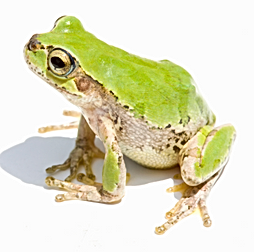
CHD2 mutant frog allele with a 22bp deletion within the second chromodomain, though not yet published.
For inquiries and additional information please contact, Helen Willsey, PhD, Helen.Willsey@ucsf.edu
Stock will be distributed through the National Xenopus Resource (NXR)
Have you or your loved one been diagnosed with CHD2?
Register here